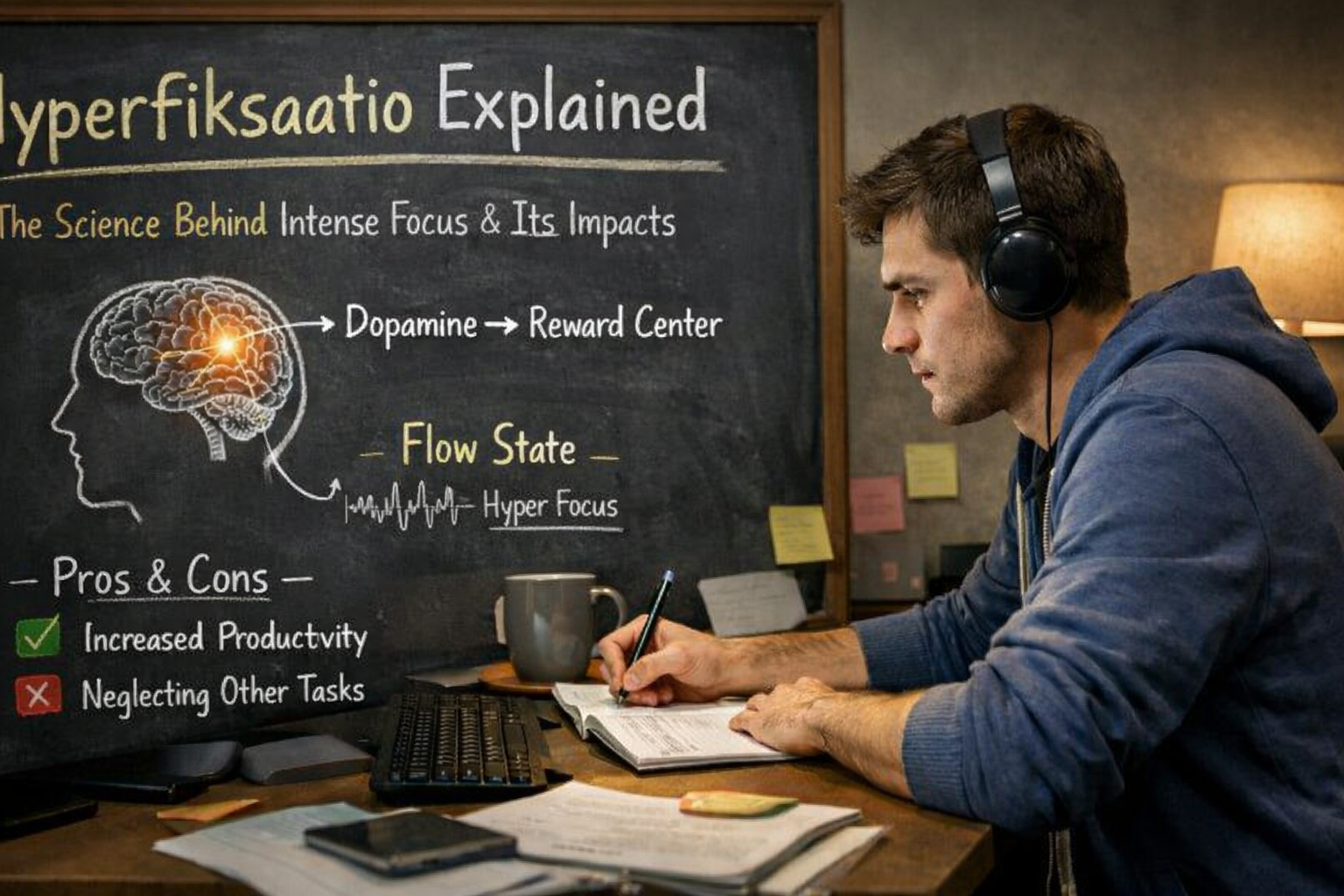
Hyperfiksaatio Explained: The Science Behind Intense Focus and Its Impacts
Have you ever found yourself completely absorbed in a task, losing track of time and everything around you? This phenomenon, known as hyperfiksaatio, is more than just intense focus. It’s a deep dive into the realms of attention that can be both exhilarating and overwhelming. Whether you’re working on a creative project or studying for exams, hyperfiksaatio can help you achieve remarkable results. But what exactly is it? And how does it affect our daily lives? Let’s unravel the science behind this intriguing state of mind and explore its many dimensions.
What Is Hyperfiksaatio?
Hyperfiksaatio, or hyperfocus, is an intense concentration on a specific task or interest. This state often goes beyond mere focus; it can lead to complete immersion in an activity. People experiencing hyperfiksaatio may lose track of time and their surroundings.
This phenomenon can manifest in various ways, from diving deep into a hobby to obsessively working on a project. While many view it as a gift, others see the potential downsides.
Often associated with neurodiverse conditions like ADHD and autism, hyperfiksaatio highlights how attention can be both a superpower and a challenge for individuals navigating daily life.
The Science Behind Hyperfiksaatio
Hyperfiksaatio, or hyperfocus, stems from neurological processes that enable intense concentration. The brain’s reward system releases dopamine during deep engagement with specific tasks, enhancing motivation and focus. This surge improves cognitive performance in the moment.
Neuroscience reveals that heightened attention alters brain wave patterns. Individuals may enter a state where distractions fade away completely. Such changes allow for remarkable productivity but can also complicate task-switching when needed.
Understanding these scientific underpinnings helps us grasp how hyperfiksaatio can be both a gift and a challenge. It emphasizes the unique ways our brains function under intense focus, influencing behavior across various contexts.
Hyperfiksaatio vs. Flow State
Hyperfiksaatio and flow state both involve intense focus, yet they differ significantly. Hyperfiksaatio is characterized by a singular fixation on a specific task or interest, often driven by passion or need. This can lead to deep engagement but may also overshadow other responsibilities.
On the other hand, flow state represents optimal experience in which one feels fully immersed in an activity with a sense of effortless control. It typically occurs when challenges align perfectly with skills.
While hyperfiksaatio can be spontaneous, flow requires balance between challenge and skill level for sustained productivity without distraction.
Benefits of Hyperfiksaatio
Hyperfiksaatio can lead to remarkable productivity. When an individual is intensely focused on a task, they often complete it faster and with greater precision. This heightened concentration allows for deep exploration of ideas and creative solutions.
Moreover, hyperfiksaatio fosters a sense of satisfaction and achievement. Diving deep into interests can generate joy and fulfillment, enhancing overall well-being. It’s like being in a personal zone where distractions fade away.
Additionally, this intense focus can promote skill development. Spending hours honing a craft or mastering knowledge leads to expertise that benefits both personal growth and professional advancement.
Challenges of Hyperfiksaatio
While hyperfiksaatio can lead to remarkable focus, it also presents unique challenges. One significant issue is the potential for neglecting other responsibilities. When someone becomes fixated on a task, they may overlook essential daily activities.
Additionally, intense concentration can create social isolation. Friends and family might feel neglected when an individual immerses themselves in their interests for extended periods. This disconnect can strain relationships over time.
Moreover, hyperfiksaatio often leads to fluctuations in productivity. Individuals may experience bursts of creativity followed by burnout or frustration once the fixation fades away, complicating work-life balance further.
Hyperfiksaatio in ADHD and Autism
Hyperfiksaatio often manifests in individuals with ADHD and autism. It allows them to immerse themselves deeply in topics of interest, leading to remarkable knowledge or skills. This intense focus can create a sense of accomplishment.
For people with ADHD, hyperfiksaatio may help offset challenges related to attention. They might find it easier to stay engaged when working on something they are passionate about.
In those on the autism spectrum, this phenomenon can serve as a coping mechanism. It offers comfort and stability while providing an outlet for creativity and self-expression through specialized interests.
Real-Life Examples
Many artists experience hyperfiksaatio when immersed in their creative process. For instance, Vincent van Gogh often painted for hours without breaks, completely absorbed in his work. This intense focus allowed him to create masterpieces that reflected his passion and vision.
In technology, programmers can also demonstrate this phenomenon. Coders frequently lose track of time while debugging or developing software. Their concentrated state enhances problem-solving capabilities.
Additionally, students may exhibit hyperfiksaatio during exam preparation. Some find themselves fixating on specific subjects or topics, leading to an impressive retention of information and deeper understanding despite potential challenges with attention elsewhere.
Practical Strategies for Managing Hyperfiksaatio
To manage hyperfiksaatio, start by setting clear boundaries. Allocate specific time slots for focused work and stick to them. This helps prevent endless spiraling into one task.
Incorporate breaks into your routine. Short intervals can rejuvenate the mind and allow you to return with fresh energy. Simple activities like stretching or a brief walk can work wonders.
Use tools such as timers or apps designed for productivity. These can help remind you when it’s time to switch tasks, ensuring that obsessive focus doesn’t derail other responsibilities in your life.
Technology and Hyperfiksaatio
Technology plays a significant role in hyperfiksaatio. It can amplify focus, creating an environment where individuals dive deeply into their interests. Apps and tools designed for productivity often harness this intense concentration.
However, technology can also be a double-edged sword. Notifications and distractions may disrupt the flow, pulling attention away from the task at hand. Finding that balance is key.
Many people use tech to channel their hyperfiksaatio positively. They set timers or organize tasks digitally to stay engaged with their passions without losing control over time management or overall well-being.
Cultural and Social Perspectives
Hyperfiksaatio has varying interpretations across cultures. In some societies, intense focus is celebrated and viewed as a sign of dedication. This perspective encourages individuals to pursue their passions relentlessly.
Conversely, in other cultures, such an extreme focus may raise concerns about balance and well-being. Striking the right equilibrium between focus and social engagement can be challenging.
Socially, hyperfiksaatio often connects individuals with shared interests. Communities form around specific topics or hobbies, fostering connections that deepen understanding and collaboration among like-minded people. Such bonds highlight the positive aspects of this unique cognitive phenomenon.
Conclusion
Hyperfiksaatio opens a fascinating window into how our brains can focus intensely on specific tasks or interests. This phenomenon has profound implications for productivity, creativity, and personal growth. While it brings numerous benefits, including deep engagement and exceptional skill development, challenges like distractions and burnout must be acknowledged.
Understanding hyperfiksaatio requires examining its neurological underpinnings as well as cultural contexts. By exploring real-life examples and practical strategies for managing intense focus, we can harness this unique ability effectively. Whether you’re navigating ADHD or simply looking to optimize your workflow, the insights gained from studying hyperfiksaatio are invaluable for anyone interested in the complexities of human attention.